
An honor for the dead, a celebration for the living.
Every Nov. 2, souls come together to commemorate the past and acknowledge the new.
It’s called Día de los Muertos.
Day of the Dead.
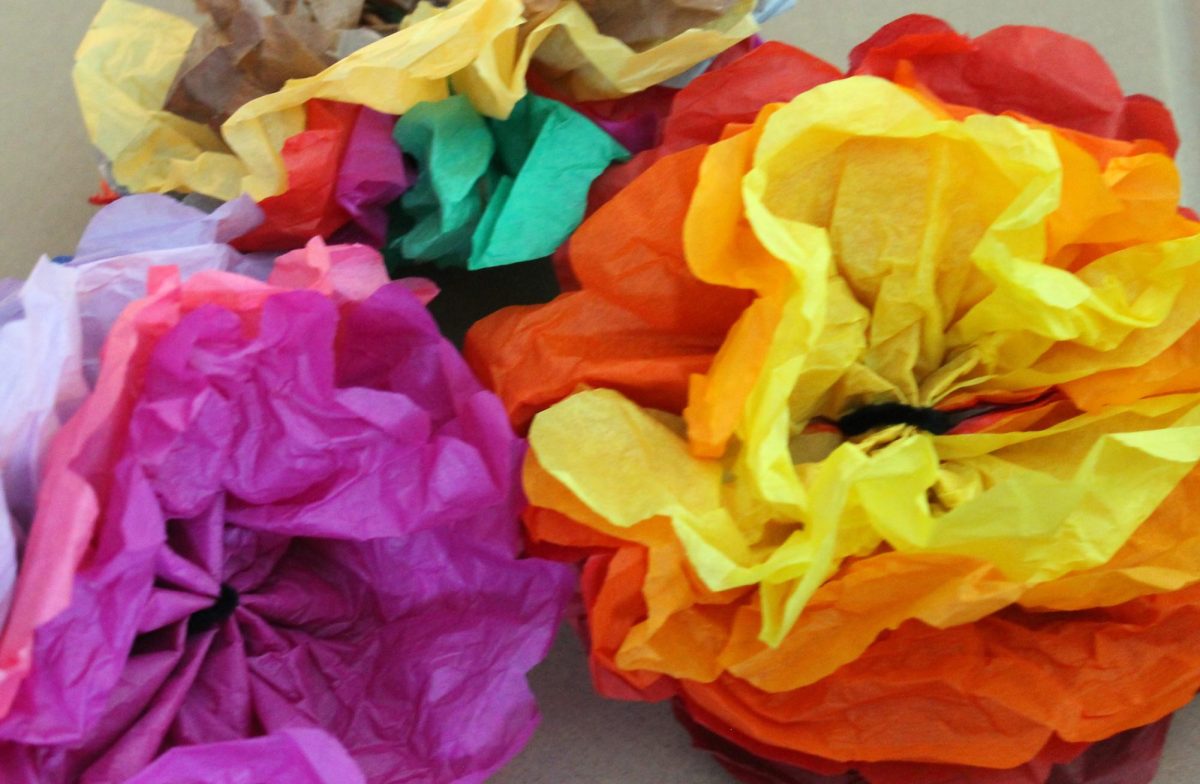
Spanish teachers and students gathered in the library to celebrate Dia de los Muertos, Day of the Dead, Oct. 31. During that celebration, the students learned more about the celebration and the culture, as well as what the holiday might mean to them. Stations were set up, which included painting rocks of calacas (Spanish skeletons), making cempasuchiles (Spanish marigold flowers), and eating Pan de Muerto (Bread of the Dead), which are whole bread loaves doused in sugar.
“I think it is important for students to learn about Dia de los Muertos, as it gives them experience with other cultures and the world around them,” freshman Nate Walker said. “I enjoyed [the celebration in the library], and I did find it productive because we got to engage in a different culture other than our own.”
Students were learning about Dia de los Muertos in class throughout the week leading up to Oct. 31. They did this by watching Coco, a movie about a Mexican boy in the realm of the dead during Día de los Muertos.
“Students need to learn about the cultures and traditions associated with that holiday,” Spanish teacher Marcos Chapa said. “Kids could come together and collaborate on the Mexican traditions of Dia de los Muertos. I found [the celebration] very productive; the kids were very engaged in all rotations and stations. It was a good experience for students who do not have a Hispanic background.”
In the library, students got to paint rocks of calacas. After students painted the skulls, they were able to go around and view other rocks painted while drinking hot chocolate.
“I did enjoy [the celebration] because it allowed the teachers to converse with students other than the ones that are in their class,” Spanish teacher Denisse Eddings said. “It was a bit overwhelming since it was my first celebration, but once we got the rhythm of the organization events, it was fun to interact with everyone and for them to understand Latin culture.”
It took Spanish teachers two hours for the actual setting up of the activities and an entire week of preparation.
“I felt happy,” Nate said. “I was enjoying myself doing the different activities and learning about different cultures with my friends. I really liked the entertainment, and it was very engaging; it was very fun experiencing a culture different from my own.”
Students were able to get their faces painted by art students; the face paint was used to represent skulls. With this, students were also able to observe an ofrenda (alter) of Selena Quintanilla.
“I felt it was bringing back memories of the loved ones in the past for the students,” Chapa said. “They made me feel like the best teacher in the world; they were so interested in the holiday.”

JDRH • Dec 2, 2025 at 11:24 am
This is super kewl